Our Research
ONC010ᵀᴹ
The Next Generation Drug Formulation
ONC010, our lead drug candidate, is built on PNKP inhibitor technology exclusively licensed from the University of Alberta.
Preclinical studies have shown PNKP inhibitor to be effective against multiple cancers, and to be synthetically lethal in cancers deficient in the tumour-suppressor genes SHP-1¹ and PTEN². Twenty-six patent assets across five families, exclusively licensed and sublicensed, support the PNKP technology and ONC010.

Future Expansion
Preclinical activity has been shown across colorectal, breast, ovarian and prostate models, with a GBM study underway. The lead indication is biomarker-selected: PTEN- or SHP-1-deficient malignancies.

Cancer-Targeted Approach
Proprietary Formula: Aims to prevent DNA repair to eliminate cancer cells
Enhanced Delivery: Nanoparticles ensure precision targeting
Optimized Results: Designed to work with chemo/radiation/surgery to potentially improve outcomes and reduce side effects
Cancer-Targeted Approach
Proprietary Formula: Aims to prevent DNA repair to eliminate cancer cells
Enhanced Delivery: Nanoparticles ensure precision targeting
Optimized Results: Designed to work with chemo/radiation/surgery to potentially improve outcomes and reduce side effects
Key Advantages
Scalable across multiple cancer types
Two Modes of Action: Synthetic Lethality, and Chemo - or Radiosensitization.
Favourable tolerability in animal models at maximum feasible dose
Key Advantages
Scalable across multiple cancer types
Two Modes of Action: Synthetic Lethality, and Chemo - or Radiosensitization.
Favourable tolerability in animal models at maximum feasible dose

Colorectal Drug Success
Preclinical Validation
Tumor Reduction and Survival Impact
Existing Results in Animal Models
Figure 1
Figure 1
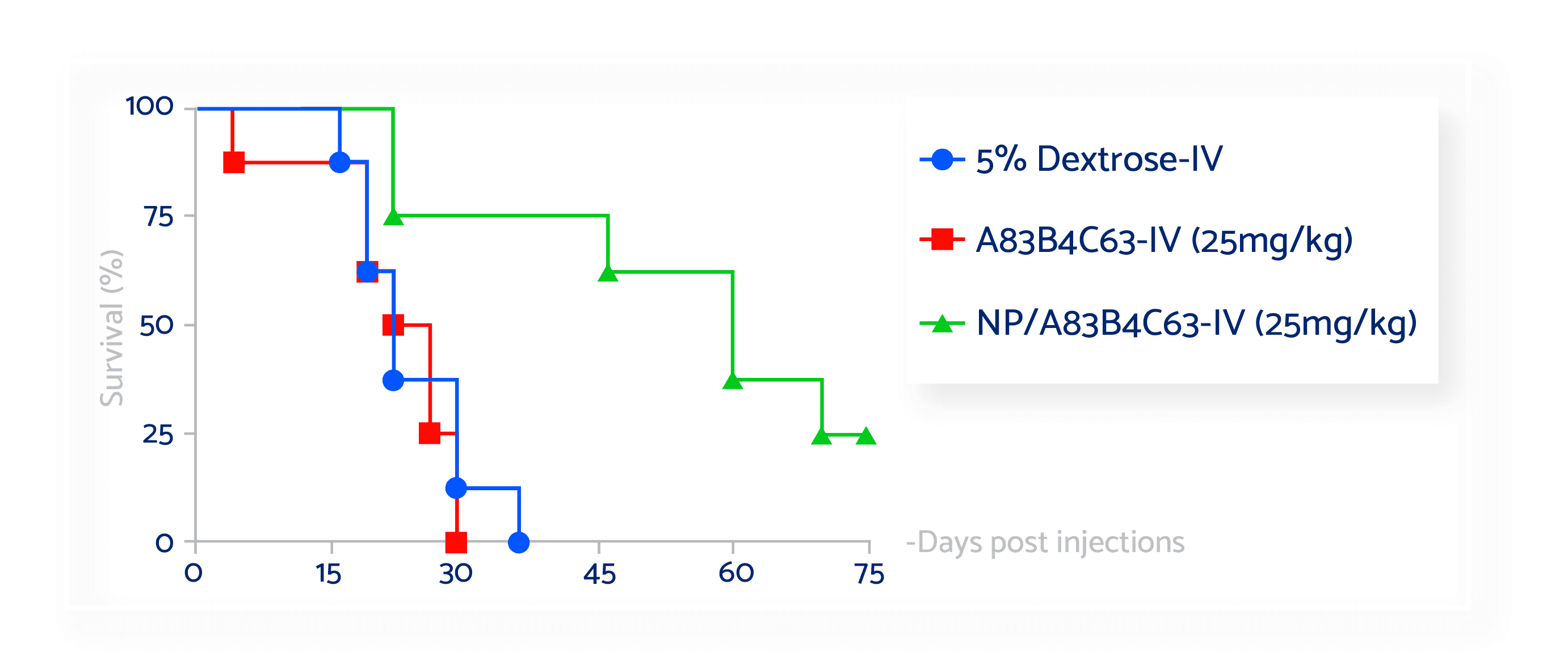
Studies revealed PEO-PBCL, Onco's novel nanoparticle formulation, demonstrated a noticeable increase in median survival time of 60 days, compared to 23 days in untreated mice with PTEN-deficient colorectal cancer (CRC).¹


Figure 2
Figure 2
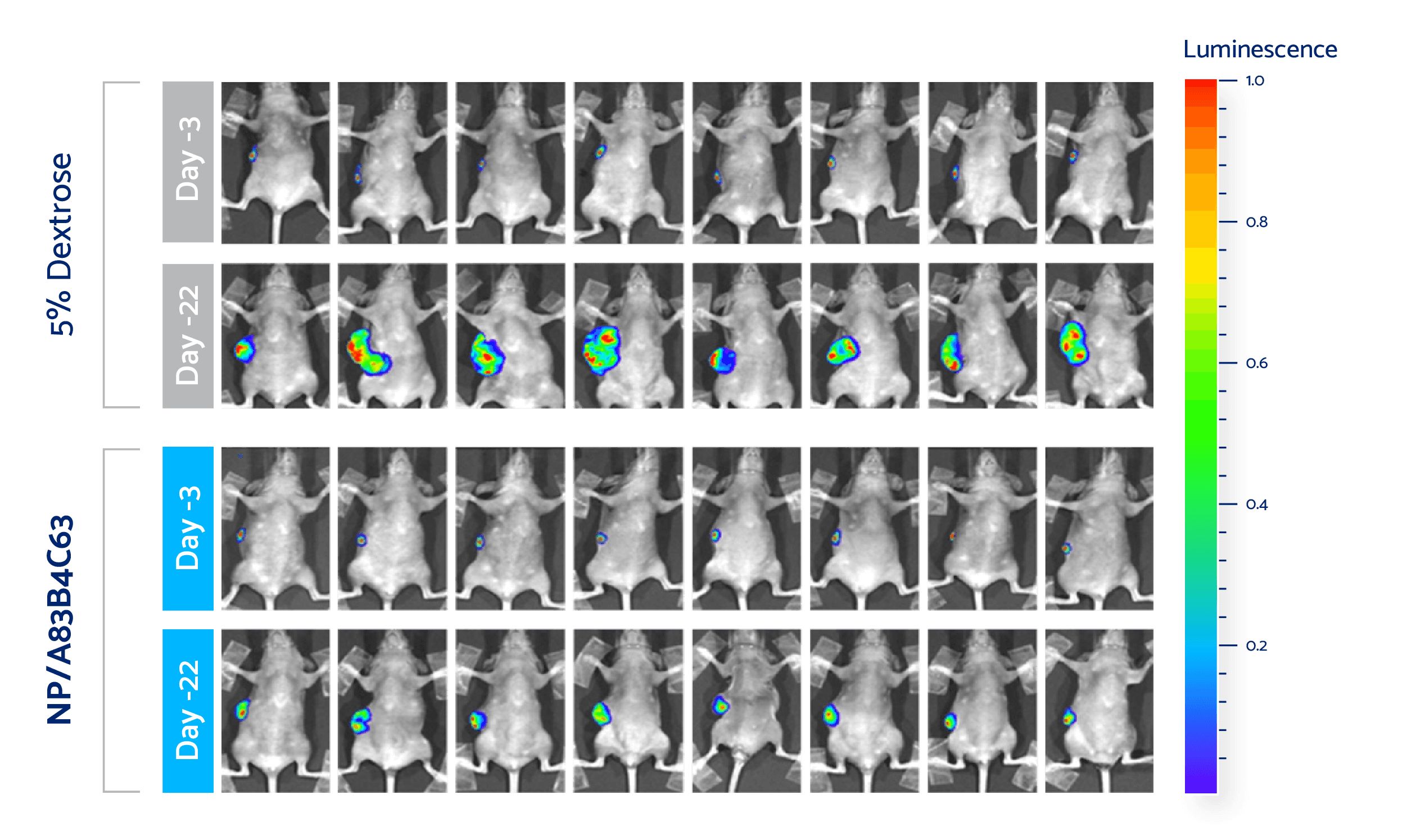
Compared to placebo, PEO-PBCL showcased solid performance, reducing tumor growth.²
Path to Regulatory Approval
A regulatory roadmap for PNKP drug candidates
Validated Preclinical Data
Preclinical studies in laboratory and animal models have shown antitumour activity and a favourable early tolerability profile.
Validated Preclinical Data
Preclinical studies in laboratory and animal models have shown antitumour activity and a favourable early tolerability profile.
Validated Preclinical Data
Preclinical studies in laboratory and animal models have shown antitumour activity and a favourable early tolerability profile.
Regulatory Milestones
Preparations for clinical translation mid-2027, with Phase 1 trial approvals and activation to follow, focusing on safety and dosage.
Regulatory Milestones
Preparations for clinical translation mid-2027, with Phase 1 trial approvals and activation to follow, focusing on safety and dosage.
Regulatory Milestones
Preparations for clinical translation mid-2027, with Phase 1 trial approvals and activation to follow, focusing on safety and dosage.
Global Multi-Region Strategy
Australian HREC and TGA Clinical Trial Notification pathway for the planned Phase 1 study, with further jurisdictions to follow.
Global Multi-Region Strategy
Australian HREC and TGA Clinical Trial Notification pathway for the planned Phase 1 study, with further jurisdictions to follow.
Global Multi-Region Strategy
Australian HREC and TGA Clinical Trial Notification pathway for the planned Phase 1 study, with further jurisdictions to follow.
References
Sadat et al. A synthetically lethal nanomedicine delivering novel inhibitors of polynucleotide kinase 3′-phosphatase (PNKP) for targeted therapy of PTEN-deficient colorectal cancer. J Control Release. 2021 Jun 10;334:335-352. doi:10.1016/j.jconrel.2021.04.034. https://www.sciencedirect.com/science/article/pii/S016836592100208X?via%3Dihub
Reach Us
#1000, 1122 - 4th St SW
Calgary, Alberta, Canada
T2R 1M1
investors@oncoinnovations.com
+1 (888) 261–8055
© 2026 Onco-Innovations Limited | All Rights Reserved
Reach Us
#1000, 1122 - 4th St SW
Calgary, Alberta, Canada
T2R 1M1
investors@oncoinnovations.com
+1 (888) 261–8055
© 2026 Onco-Innovations Limited | All Rights Reserved
Reach Us
#1000, 1122 - 4th St SW
Calgary, Alberta, Canada
T2R 1M1
investors@oncoinnovations.com
+1 (888) 261–8055
© 2026 Onco-Innovations Limited | All Rights Reserved
Reach Us
#1000, 1122 - 4th St SW
Calgary, Alberta, Canada
T2R 1M1
investors@oncoinnovations.com
+1 (888) 261–8055
© 2026 Onco-Innovations Limited | All Rights Reserved